
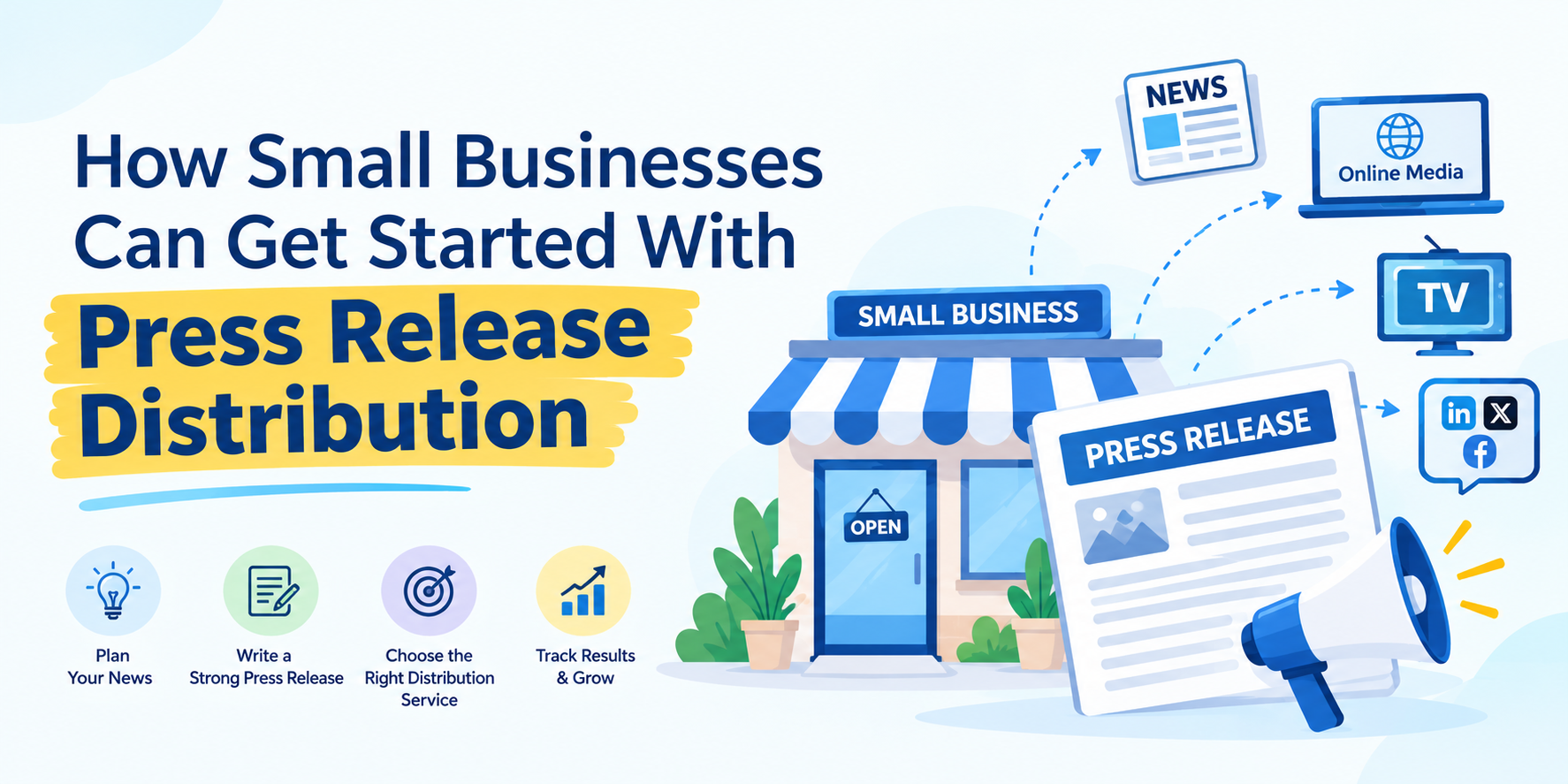
For a small business, a press release can be one of the more affordable ways to put news in front of reporters, customers, and local search results. The catch is that most owners have never sent one, and the process can look more complicated than it is. Questions about where to send it, how to write it, and what it will cost tend to stop people before they begin.
This guide walks through the process in plain steps: deciding whether you have real news, writing a clear release, understanding pricing, choosing a distribution partner, and measuring what happened afterward. It is written for U.S. small businesses, including first-time senders with limited budgets.
What Press Release Distribution Actually Is
PR distribution is the process of sending a press release to a network of news sites, feeds, aggregators, and sometimes journalist databases. Writing the release is one task. Getting it published and seen by the right people is a separate one, and that second task is what distribution services handle.
It helps to set expectations early. Distribution makes your announcement available to reporters and readers, and it can help your news appear in search results. It does not guarantee that a journalist will write about you. Editors decide what to cover based on whether the story is timely, relevant, and clearly presented.
Step 1: Decide Whether You Have News
The most common mistake small businesses make is sending a release when there is nothing newsworthy to report. A press release should announce something specific that a reader outside your company would care about.
Good reasons to send one include:
- Opening a new location or expanding services
- Launching a new product or major feature
- Hiring a notable executive or reaching a company milestone
- Receiving an award, certification, or funding
- Announcing a partnership or a community event
Routine updates, such as a minor website change or a sale, usually do not justify a release. Ask yourself one question: would a local reporter or an industry newsletter find this interesting? If the answer is no, a blog post or social update may be a better fit.
Step 2: Write a Clear, Factual Release
A press release is not an advertisement. Journalists read dozens of them a day, and the ones that get noticed are short, specific, and easy to verify.
A standard release includes:
- A headline that states the news in plain words
- A dateline with the city, state, and date
- An opening paragraph answering who, what, when, where, and why
- A quote from a founder or spokesperson that adds perspective
- Background information about the company in a short paragraph
- Contact details so reporters can follow up
Keep the release between 300 and 500 words, avoid hype, and make sure every claim can be backed up. If you mention numbers, dates, or names, double-check them. Accuracy builds trust with editors, and it is part of what separates a credible release from a promotional one.
Some small businesses write their own releases. Others use editing or writing help, which is often priced separately from distribution. Either approach works, as long as the final text is clear and factual.
Step 3: Understand Pricing Before You Shop
One of the first questions owners ask is how much does a press release cost. The honest answer is that it depends on what is included. A release posted on a few sites is a different product from a national campaign with industry targeting and reporting. If you are asking how much does it cost to do a press release for a small business, the ranges below are a realistic starting point for U.S. buyers.
| Price range | What it usually includes |
|---|---|
| Under $150 | Basic writing support or a very limited distribution network |
| $150 – $300 | Entry-level packages, selected news sites, standard reporting |
| $300 – $800 | Wider network, more placements, better reporting |
| $800 – $1,500 | National reach, premium networks, industry targeting, analytics |
| $1,500 and above | International distribution and larger campaigns |
Most small businesses end up spending between about $150 and $1,000 per release. The press release cost at the lower end typically buys modest reach, while higher tiers add targeting, reporting, and a larger network. When people compare press release distribution pricing, the details matter as much as the headline number: word limits, image allowances, and any membership or account fees can all change the final bill.
Some providers publish their tiers openly, which makes comparison easier. For example, SP Tech Solutions lists packages that range from about $150 at the entry level to around $1,000 for broader reach, which gives buyers a clear picture of how price relates to the size of the network.
As a rule, the cost for a press release should be tied to specific deliverables you can list on paper. If a quote is vague about what you receive, ask for a written breakdown before paying.
Step 4: Know What Drives the Price
Two services can quote very different numbers for what looks like the same thing. These are the factors behind most differences in press release distribution cost:
- Network size and relevance. A larger network costs more to maintain, but a smaller network of relevant outlets can be worth more to a local business.
- Targeting. Sending news to reporters who cover your industry or region usually costs more than a general feed.
- Word count. Many packages include a set number of words and charge extra beyond that.
- Multimedia. Images, logos, and video are often add-ons.
- Reporting. Basic packages may only confirm publication, while higher tiers show readership data and link clicks.
- Turnaround. Same-day distribution can cost more than standard processing.
When you hear a claim about the cost of press release services being low or high, these variables are usually the reason. A cheap package is not necessarily bad, and an expensive one is not automatically better. What matters is whether the features match your goal.
Step 5: Choose a Distribution Partner
Once you know your budget, compare providers on the same terms. A short checklist helps:
- What is included in the base price, and what is extra?
- Which outlets receive or publish the release, and are they relevant to your audience?
- Can you target by industry or location?
- What does the report show after distribution?
- What is the policy if the release needs a correction?
- Are there independent reviews from other small businesses?
It also helps to read the terms of service. Look for refund rules, edit policies, and what happens if a release is rejected. Be cautious about any provider that promises guaranteed coverage, guaranteed rankings, or guaranteed traffic, because no one can promise those outcomes.
Some firms bundle editing, formatting, and distribution under one roof. Providers that offer press release solutions of this kind can save time for owners who are not comfortable writing, though the extra services should be itemized so you can see what you are paying for. SP Tech Solutions is one example of a provider that separates its tiers by network size and features, which makes it easier to see what each level covers.
Step 6: Match the Service to Your Industry
Targeting becomes more important as your announcements get more specialized. A restaurant opening in Austin gains little from national exposure and may be better served by a regional circuit. A software company, on the other hand, benefits from reaching reporters who cover technology.
That is where technology PR distribution comes in. It generally means sending a release to journalists, analysts, and publications that cover software, hardware, cybersecurity, AI, and related fields. If you run a technology business and are comparing tech PR distribution options, ask whether the service offers a dedicated technology circuit, which outlets it includes, and whether you can target by topic as well as region.
For non-technical businesses, the same logic applies to other industries: healthcare, real estate, food, finance, and local news each have their own audiences and outlets.
Step 7: Time Your Release Well
Timing affects how much attention a release gets. A few practical tips:
- Send releases on weekday mornings, when reporters are most active.
- Avoid major holidays and big news days when your story may be buried.
- For events, send the release early enough for coverage to run before the date.
- For product launches, coordinate with your website update so that readers can find more information immediately.
If your announcement is tied to a specific time, confirm with the provider how long distribution takes so that the release lands when you intend.
Step 8: Measure What Happened
After distribution, review the report you receive. Useful reporting typically includes a list of sites where the release was published, views or impressions where available, clicks on links within the release, and any pickup by journalists or aggregators.
Use that information to improve the next release. If a headline drew more clicks than another, note the wording. If a certain outlet picked up the story, consider building a relationship with its reporters. Over time, a few well-measured releases will teach you more than any general advice.
Common Mistakes to Avoid
- Sending a release with no real news. Editors notice, and it can reduce the chance that future releases get attention.
- Writing promotional copy. Phrases like “best in the industry” read as advertising, not news.
- Stuffing keywords. Search engines and editors both prefer natural, readable writing. Google’s spam policies caution against large-scale distribution that relies on keyword-heavy anchor text, so use a natural link to your company or a relevant page instead.
- Ignoring the fine print. Hidden fees for extra words, images, or reports can raise the final price.
- Expecting instant results. Coverage, if it comes, may take days or weeks.
Frequently Asked Questions
How much does a press release cost for a small business? Most small businesses spend between about $150 and $1,000 per release, depending on reach, targeting, and reporting. Lower-priced options exist, but they usually offer limited distribution.
Do I need a press release for every announcement? No. Reserve releases for real news, such as launches, openings, partnerships, and milestones. Smaller updates are often better suited to your website or social channels.
Can I write the release myself? Yes. Many small business owners do. If you want a second pair of eyes, some providers offer editing as an add-on.
Will a press release help my search rankings? A release can help your news appear in search results and bring referral traffic, but it is not a shortcut for link building. Focus on real news and a natural link.
How long does distribution take? Many services publish within hours or a day, depending on the package. Confirm the timeline before you pay.
Final Thoughts
Getting started with press release distribution does not have to be complicated. Begin with a story that deserves attention, write it clearly, choose a package that fits your goal and budget, and review the results. Compare written quotes, read what each tier includes, and be skeptical of guarantees.
For owners who want a transparent starting point, a provider like SP Tech Solutions, which sets out its tiers and inclusions plainly, shows the kind of clarity worth looking for. Whichever service you choose, a clear, accurate announcement sent to the right audience will do more for your business than the largest package on the market.