
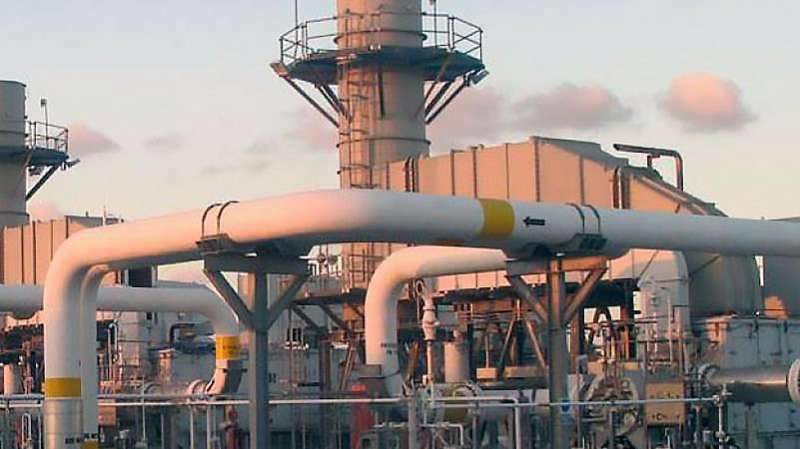
Enhanced Oil Recovery EOR Systems and Facilities
EN-FAB Inc provides advanced enhanced oil recovery EOR systems and facilities to maximize hydrocarbon recovery and extend reservoir life with proven engineering solutions.
Regeneration Principles And Methods
During the service or softening phase of water softener, the throughput of raw water exchanges calcium and magnesium ions (“Hardness elements”) for sodium ions, while flowing through the sodium zeolite resin beds. After a metered volume of water has passed through the system, the available sodium ions become depleted, and the resin is considered exhausted for efficient softening purposes. Whenever feasible, vessel sizes and resin volumes are selected to allow a minimum of 8 hours service flow before primary vessel resin exhaustion is approached.
In the absence of a preceding raw water filtration system, the primary vessel resin bed tends to collect any solids present in the raw water flow, eventually creating a flow restriction and reducing softener throughput. Such a “filtering” tendency is not a design consideration, but an inherent characteristic that must be tolerated in certain instances.
Also, during the service flow, smaller resin particles tend to “pack down” among the larger ones, and must be periodically redistributed, or “fluffed”, to retain maximum resin bed efficiency.
With the exception of very large systems, all components are unitized in a self contained package, either skid or trailer mounted, with optional mounting configuration available to suit any application.
In certain systems, raw water filtration vessels may precede the softener banks, either unitized with the system, or operating as an add-on. Filter maintenance controls are often integrated with those of the softener system.
The two vessel “series”, or primary/ polisher flow design allows maximum utilization of resin in the primary vessel between regeneration cycles, while still maintaining “zero” hardness effluent water throughout the service flow duration. Allowable raw water throughput and regenerant brine calculations are based on the volume of resin in the primary vessel only, leaving the polisher vessel to function as its name implies, removing the normally increasing hardness leakage from the primary vessel, as the primary resin approaches exhaustion. The polisher also serves as a back-up softening vessel, in the event raw water hardness increases for some reason exhausting the primary vessel resin before the selected throughput is reached.
Careful consideration is given to the construction and placement of vessel internals, with inlet distributor and outlet collector/strainer manifolds designed for mechanical strength and minimal flow restriction. Depending on anticipated operating conditions, stainless steel or PVC strainers are used, which are sized, and spaced across the vessel to prevent “channeling” flow through the resin beds, at design service flow rates.
External support requirements for the water softener systems include a consistent source of raw water, with known constituents, and preferably delivered to the softener charge pump at 2 psig minimum suction head pressure. In most cases, the only additional support requirement is a reliable and adequate source of three phase electrical power.
In certain softener systems, a reliable supply of 70 psig minimum compressed air is also required, where pneumatic flow measuring instruments and controls are supplied, usually at customer’s request. The standard softener flow control valves can either by operated on system charge pump water pressure, or compressed appropriately.
Sorry, there were no items that matched your criteria.